
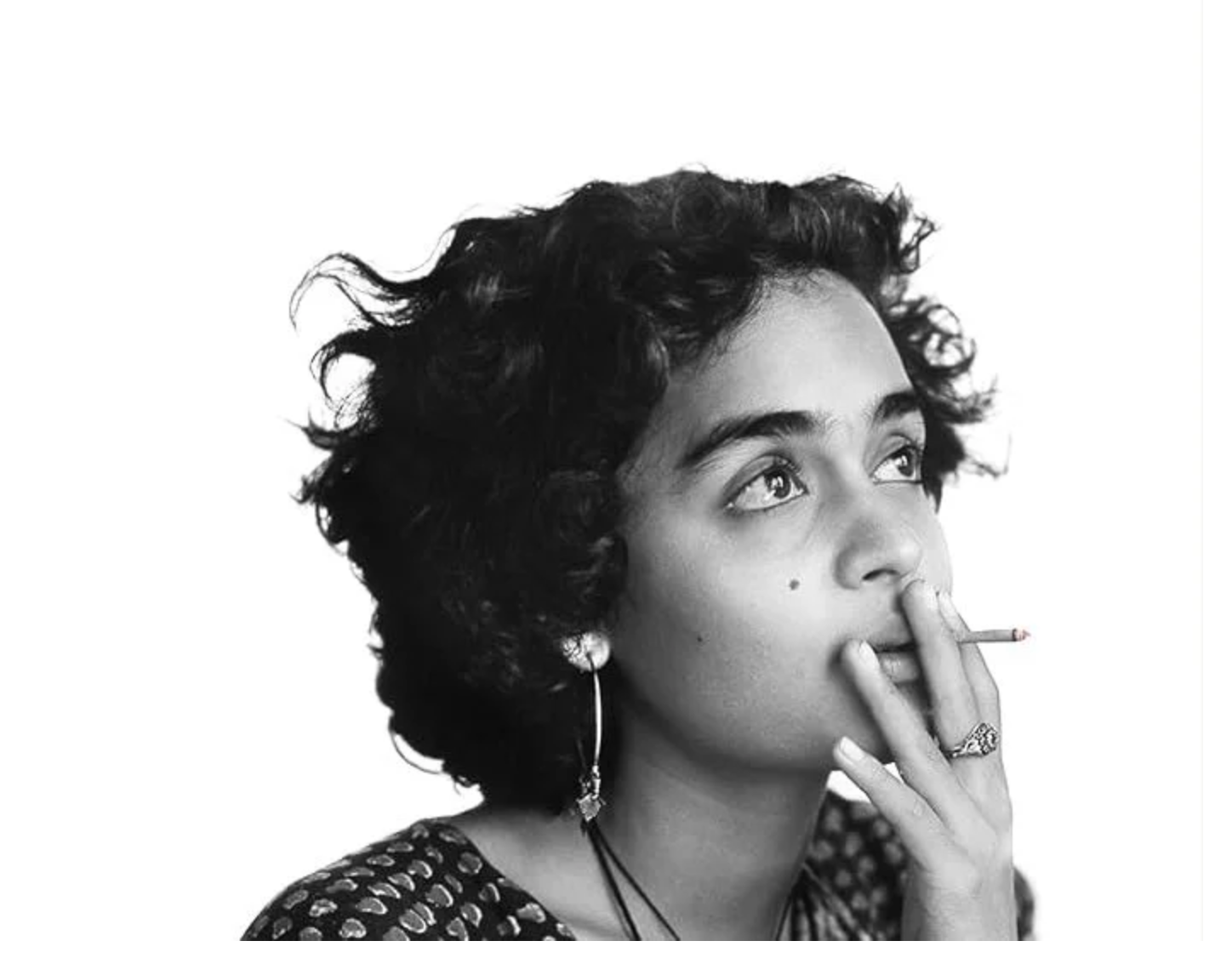
Arundhati Roy’s first memoir, Mother Mary Comes to Me, arrives decades into a career defined by literary masterpieces like The God of Small Things and other works. This new outing is a profound and often excruciating reckoning with the singular, formidable force who shaped what type of writer and activist Roy would become: her mother, Mary Roy. Written in the wake of Mary Roy’s death in September 2022, the book is a raw, expansive, and intimate chronicle that traces the complex relationship between two fiercely independent, yet perpetually entangled, women. The famous dedication in The God of Small Things, “Mary Roy who loved me enough to let me go,” is explicitly acknowledged in the memoir as “a lie. A good one,” demonstrating the author’s relentless commitment to unsparing honesty, even at the cost of cherished personal mythology.
The language is rich, dense, and commanding, allowing Roy to transition fluidly between the intimate and the epic. In one moment, she is detailing a personal moment of grief; in the next, she is setting that grief against the backdrop of rising Hindu nationalism and what she perceives as the dismantling of Indian democracy. It possesses the emotional depth of Roy’s fiction and keen analytical insights of her non-fiction, vividly described in her unique prowess and style.
The heart of Mother Mary Comes to Me is the life and death of Mary Roy, whom Arundhati variably describes as “my shelter and my storm,” her “most enthralling subject,” and a kind of “gangster” figure. The memoir begins with the author being “heart-smashed” yet puzzled and somewhat ashamed by the intensity of her grief at the passing of her mother. This emotional ambiguity provides the initial impetus for the narrative: an attempt to write with clarity about a relationship defined by both intense love and visceral cruelty.
The story unfolds across two main acts. The first part delves into Roy’s tumultuous childhood in Kerala, a world that served as the backdrop for The God of Small Things. We learn about the life and circumstances of Mary Roy, and gain some perspective on how she came to be the complicated, volatile person that she was. After divorcing her alcoholic husband Rajib ‘Mickey’ Roy, who she frequently refers to as a “nothing man”, and who she married only to escape her violently cruel father, Mary became a single mother in a deeply patriarchal society. She transformed herself into a force to reckon with as a pioneering educator and leader by building and establishing a school in the wilderness of Kerala that is operating successfully to this day. She fought and won a landmark legal battle with the Supreme Court of India against the discriminatory practice of denying daughters the right to inherit their family’s property—a display of commendable resilience and courage.
In a noteworthy development, “nothing man” Mickey Roy, who is almost completely absent during Roy’s childhood, enters her life for a period during her adulthood. This is where Roy writes in her most droll and lighthearted manner in the memoir, but also with utmost poignancy and kindness.
Mary Roy demanded to be addressed as ‘Mrs. Roy’ even by Arundhati and her brother Lalit Kumar Christopher (LKC) so that they wouldn’t be seen as receiving preferential treatment over other school children. The early chapters of the book detail a life lived “walking on eggshells,” defined by a “constant, debilitating fear” of inciting their mother’s vitriolic wrath by the siblings. Arundhati eventually left home at age sixteen, not because she didn’t love her mother, but “in order to be able to continue to love her.”
The second half of the book maps Arundhati’s life after her escape—her tumultuous young adulthood in Delhi, her path through architecture school, her meteoric, almost overnight rise to global fame and wealth with the Booker Prize for The God of Small Things in 1997. We learn about her journey as the writer of her second novel, The Ministry of Utmost Happiness, several non-fiction works, and subsequent career as an outspoken political activist. Over the years, Mary Roy remains an indelible presence, alternating between being fiercely proud of her daughter’s celebrity and furiously puncturing her success.
Roy uses her family trauma to interrogate the structural violence of society, asking: what makes us revere our persecutors, and what is the cost of freedom? She argues that the difficult upbringing shaped the “free-spirited, headstrong, risk-taking writer” she became, making her mother’s darkness an unlikely “route to freedom.”
The memoir excels at placing a private story within a public, tumultuous context. The narrative traces decades of Indian political history, from the receding post-Independence idealism in the nineteen seventies to the rise of Hindu nationalism in the nineties and beyond, detailing Roy’s activism (such as the Narmada dam protests and her obscenity trial after The God of Small Things). By weaving her life into the nation’s political evolution, Roy elevates the memoir into a meditation on identity, resistance, and nationhood itself. For those interested in the thorny dynamics of family, the life of a revolutionary artist, or the complex social history of modern India, this book is an intimate, stirring, and ultimately triumphant chronicle.
Comments
4 responses to “Book Review: Mother Mary Comes To Me by Arundhati Roy”
Loved the book MM comes to me and loved ur review of it even more. It clearly and simply describes not only the book but would motivate anyone who hasn’t read it so far.
Thank you, Kirti. Glad enjoyed the book, and liked the review too!.
Mother Mary comes to me moves us through the complex life of the remarkable author and her even more remarkable mother. Your insightful review uncannily points to the salient places of the memoir. Very well written Bela!
Thank you for your well written comment, Sandhya. Greatly appreciate your feedback!